GET INVOLVED!

Posted: 10th August 2011 by kateaquillano in Notes to Sequence 64

Hey Sequence 64!

I hope you are enjoying summer bootcamp!

Alright, first things first, enjoy your time at SU because it flies by. My time with Sequence 63 was amazing, but I literally blinked and it was over. My advice (take it or leave it) is to get involved with the amazing opportunities available at Newhouse, on campus and in the Syracuse community.  My undergraduate degree was not in TV/Film or communications, so I was starting fresh at Newhouse and had one year to soak up all I could.


I worked on four shows for the Orange Television Network (Cook-Ease, Cook-Ease Presents Reel Old Movies, Campus Crush & The Review Crew), working in various roles. I edited for the Syracuse Film Festival, as well as Starfish International, an educational program for girls in West Africa.

I could not stress how much the experience gained through the above activities helped me with the transition to the working world. Studying concepts in class is great, but putting them into practice is even better. Learning first hand makes things stick. Having this background and these experiences enabled me to land two internships in Los Angeles for the summer.

So as corny as it sounds, grab a friend (or a stranger, they will be your friend sooner or later) and GET INVOLVED! Good luck Sequence 64 and hopefully I will meet some of you when you make the journey out to the West Coast!


Ye Old Advice: Volume 3

Posted: 8th August 2011 by bruizerbutler in Random Reflections

During my internship, I gathered a few pieces of advice and thoughts from coworkers, meetings and first hand experience. Thus, I thought I’d share.

♥  Learn SPANISH, especially if you move to LA. Any little bit you know can most helpful. If you’ve ever worked in a restaurant you know it to be true. Any other language you can speak or even have a basic understanding of can only set you apart and is a valuable skill. This never occurred to me when in the CDC as I don’t speak fluent Spanish but can get by. GOOGLE Translate is also a great tool.

♥  Learn AVID, another language/skill for your tool set. I know that you may not want to be an editor but Avid editing is a skill that can also set you apart from the pack. The fact that I knew Avid got me off the set as a PA and into the editing suites with a story producer in non-scripted TV. According to a meeting with an alum in features casting, knowing how to edit, deal with footage formats and compression can really come in handy when you can solve such an issue for your boss and it will not go unnoticed. In addition, Avid is still the industry standard and not many other schools have Avid facilities, other than maybe Avid Newscutter, as they do Final Cut Pro. My boss even said that being able to touch an Avid set him apart from others when he started out. Plus, have you seen the new FCP? It looks like iMovie! Editors I’ve spoken with that use both editing systems for clients consider the new version a joke.

♥  I’ve found GOOGLE Voice to be a great smartphone app that gives you a GOOGLE phone number and can come in very handy. I missed a call one day but was on my e-mail and got a message from GOOGLE Voice. It had given a transcription, though not the best, in the body of the e-mail and a link that let me play the actual message on my computer. You can also make calls from the GOOGLE Number you get.

♥  Regardless of your path after grad school, it is really important to have taken some sort of writing class and experienced the process. GOOD STORYTELLING can only improve the likeliness of you getting a job. Understanding story structure is something that can be taken for granted but even “reality” TV have beat sheets and outlines with a classic three act structure. If you don’t get to fit one in, though you did take the summer course and got some exposure, I’d recommend taking Dramatic Writing or Script Development if you can. In addition, John Campbell‘s books were made into DVD documentaries and are actually, to my surprise, streaming on Netflix (“The Hero’s Journey,” “Sukhavati,” and “Mythos II”).

♥  Need help studying for law class in the spring? Oyez is a great site for looking up cases and giving you historical significance and key points.

♥  Some DSLR, photo cameras, can shoot HD video. My friend in NYC has seen people use that approach because of the cost and lenses which gives a distinctive style. On a recent shoot a flipcam was used to gain a certain perspective and access an area the camera operators couldn’t get to with their cameras. Different types of video can give a certain style to your work and you’d be surprised how far good storytelling, regardless of the camera you use. Just a thought…

♥  No Alumni will  give you a job and if you ask you don’t deserve it. However you should be both tenacious and respectful, as some are more accessible than others, in seeking out their ADVICE and in ASKING QUESTIONS. That is what the alumni network, which you will one day be a part of, is all about. They will give you advice and answer questions. They may give you an unpaid internship or point you in the right direction. Hell, I’ve had a few look over my resume and I’m very grateful for just that. I have even, unexpectedly, been treated to lunch which any student can appreciate. So if all goes well with your contact with alumni, you’ll may start a report (dialogue) with them that is invaluable and it could lead to them thinking of you when something comes up job-wise through their set of relationships. (P.S.—> All of Sequence 63 are alumni, i.e. potential contacts. We were in your shoes only months ago and understand.)

♥  The following websites are helpful for industry news and jobs:

  1. Infolist: Jobs and news.
  2. Anonymous Production Assistant: Jobs
  3. Media-Match: Jobs, pay site
  4. Below the Line: jobs
  5. Cynopsis: Your TV Industry news you should sign up for that also has classifieds at the bottom of each update.
  6. Variety: Industry news. Newhouse has a free account for TRF.
  7. Deadline Hollywood: Industry news

Hello All,

So I just had a Skype date with Chris and Annie. We talked about life in our different cities, our internships, tv shows we’re watching and wanted to watch. Some how our conversation turned to Lifetime and Chris thought we should record that portion of our skype call for the blog. So below is the video. Unfortunately you only get to see me because we don’t know how to record from both ends. But you will hear Chris and Annie. Enjoy! If you have any thoughts on our discussion or comments on other networks or programs feel free to share.

[youtube=http://www.youtube.com/watch?v=u-l1oFD_YEo]

Hey guys,

It’s my first time posting on this wall so I thought I’d begin with this category. The journey to my internship (production internship at Discovery Studios in LA) began literally the first second I stepped inside SU’s doors – I tried to take every opportunity that came my way, from volunteering at the Make a Wish shoot during our first summer session, working on a few shows at OTN in my “spare” time, or doing side video projects on the weekends for local non-profit organizations.  I knew going into this program that I had little to no experience in production, so my attitude was to do whatever it would take to make up for lost time. I was determined, while at Newhouse, to try as many different things as possible and to get advice from as many different people as possible, so that I’d know exactly what direction I wanted to go in when I began “real life” (my first “real” job).

Skipping ahead a few months—on the January trip to LA, I felt frustrated to hear all of the speakers say that they got where they were because of “luck.” I remember thinking that if luck is what it takes to make it in the entertainment industry, I’m screwed — I’m definitely not a lucky person, and everything I’ve ever achieved in my life has come about simply through hard work and persistence. It was on the LA trip that I realized I wasn’t going to wait for the perfect internship to come to me—I was going to go out and get it for myself.  I ignored the advice I received from a lot of professors (Schoony included), which was to only apply for a few internships and trust that I’d get one (and possibly even more than one).  Instead, I applied to 30.  No joke…30.  And I got 1 out of those 30. The one internship I got happened to be the one I wanted the most, which I am very grateful for; but I wasn’t willing to risk not getting an internship at all if the chips fell in another direction.

It was definitely a struggle trying to convince myself that I wanted to move out to LA for good.  Schoony can testify to this—I was in and out of his office numerous times in the last few months of the year, trying to figure out what to do with my life.  I didn’t really see myself as an “LA person”—whatever that means—so it was hard for me to come to terms with the fact that this is where I was supposed to go and begin my life. But, now that I’ve been out here a little over two months I guess I’ve learned that there’s no such thing as an “LA person”—I have yet to meet one person out here who was born and raised in LA.  Instead, LA is a city of dreamers—there’s a hell of a lot of people out here, and almost all of them want the same things we all do…to “make it” in this business in one way or another. Once I realized that, I knew I had to do everything I could to stand out at my internship and prove, for lack of a better way to say it, that I “wanted it more.”

Here’s where I began following, and still continue to follow, Schoony’s advice:  I worked my ass off at my internship.  A normal intern day is 10am-5:30pm, but I always arrived early for work, always stayed late, and often worked on the weekends. There was even a stretch, two weeks ago, when I went into the office for the day shift and then joined a different crew on set to film a pilot at night. I worked 18+ hour days that week, but I truly loved every second of it.  People at my job tell me on a regular basis that I’m crazy—but I don’t feel crazy, because I love going to work every day. Last week, the company offered me my first job, and you would think that might make me lay off the hours a bit—but I’m still keeping it up. If there’s one thing I learned out here in my first few months, it’s that you can never get comfortable, and you can never stop proving yourself.  Ask yourself, how bad do you want it?  I don’t pretend to know all the answers, but if we keep proving ourselves and working our asses off in the process, I think we’ll all be just fine. 🙂

Advice for Sequence 64

Posted: 8th August 2011 by anniemalvasi in Notes to Sequence 64

It feels weird giving advice to Sequence 64 because I definitely don’t have ANY real answers just yet — I’m still new to LA, and I’m still trying to figure it all out myself.  In this volatile industry, where there’s so much to learn, I’m not sure I’m ever going to have the answers. So, for this post, I’m going to pass along a few bits of advice that I’ve been given from people in the industry, since I’ve been out here:

Pick a job you want to do, and tell everyone about it:  People in the business really will want to help you if you’re good at what you do, are hard working, and fun to be around.  People will want to help you especially if they think that someday you might be in a position to help them. However, no one can help you unless they know where you’re trying to go and what you’re trying to do. Sound definitive in your answer– its okay if your answer changes down the road.  Sounding definitive will give others confidence in you and your abilities.

You have to pay your dues:  The reality is that we’re not going to just waltz into the industry and become producers or directors right away. And we are not “too good” to fetch coffee and make copies, even though we have Masters Degrees. Everyone starts at the bottom in this business, so do it willingly, and even offer to do “the shit work” from time to time.  Do it with a smile on your face. Fake eagerness for it if you have to. It will show your employers that you understand the process and that you’re willing to make sacrifices to get where you want to be.

Stay loyal, but not too loyal:  Switching from job to job is how you move up, both in salary and in title.  If you stay at one company for too long, people will begin only seeing you in that one role—whatever it may be.  If you love the company you work for, great, and if you can move up there, even greater—but it might be a quicker process for you if you leave that company for a while and then come back in a different role. If you stay stagnant at one company, it will make other people think you’re incapable of working anywhere else, in any other roles. When you do get a chance to get out there and switch companies, try and work on a bunch of different projects until you find your niche; to have cooking shows, game shows, talk shows, documentaries, etc, under your belt, will make you an ideal candidate down the road for any project that may come up through the woodwork.

Hollywood (and the entertainment industry in general) is smaller than you think: Everyone knows everyone (or at least knows someone who does).  Make sure that every single person you meet has a positive impression of you, because people talk, and people in Hollywood talk A LOT. People hire their friends, and hire them over and over again. So, especially with our small group of 40 or so, we have to stick together out here in the real world. I know we’re all competitive with each other, but we have to be supportive of each other too. Favors will be repaid in this business, so keep your ties close, and make a conscious effort to keep connected to one another for the long-haul.

Hard work doesn’t go unnoticed:  Work your ass off each and every day.  Even if you don’t get formally recognized for it, people are going to remember you for your work ethic, and your work ethic is going to be what gets you a job down the road.

My last piece of advice:  the real world isn’t as scary as it seems. Make the leap!

Perhaps the biggest highlight of interning at Mandalay Pictures is the “Executive Lecture Series”. Over the course of two months, my fellow interns and I had the opportunity to interact with various executives one on one. Not only did we learn how they had come to where they are now but we were also advised on how we could possibly pursue our individual career plans, sort of on the lines of a mentoring session. Amongst those who spoke to us, I followed up with personal meetings to go a step further and be “counseled” by Mandalay’s President Cathy Schulman, Executive Vice President Peter Strauss and Vice President of Business Administrations, Michelle Hastings. Most executives at Mandalay would make the time for you if you let their assistants know you need their advice. And the great thing about the office was that the executives didn’t sit locked up in their rooms. You turned a corner and there they were, happy to say hello and ask you what your day had been like so far.

Coming back to the lecture series, there was so much discussed during these sessions that we hung on to each sentence with rapt attention even avoiding taking notes in some instances so that we wouldn’t miss out on some great chunk of industry info. Since this blog is all about sharing our experiences and forwarding any valuable knowledge gained from our internships, I went ahead and put down a few anecdotes from some of those lectures at Mandalay. They are more or less accounts of trends developing in the motion picture industry. Thought sharing this might give you, the TRF 64 batch an idea of how things have evolved and what trends persist at the moment when it comes to the movie business in Hollywood, straight from the horse’s mouth.

Cathy Schulman, Academy-award winning producer of ‘Crash’ was the first to speak to us. She also happens to be the President of ‘Women in Films’. Cathy explained to us that when she started her career, studios weren’t vertically integrated and hence more ‘indie’ genre of films with a wider range of interesting stories were being made. However, now that studios are vertically integrated, they want to finance movies with IP value, essentially stories that can be turned into franchise models (Part 1, 2 3 and so on) and those that make it easy for studios to earn revenue from merchandising, gaming etc based on the movies’ characters. This results in studios often shirking producers as sellers of stories because producers and marketers have conflicting interests. Cathy also told us what we would go on to hear several more times from numerous other assistants and executives here. In case you want to become a Development Executive or even a Producer, starting out at an agency is a fast way to grow and if the agency route doesn’t work for some, then make sure you work in a place that is active vis-à-vis the industry.

In a couple of days, Peter Strauss, Executive Vice President of Mandalay spoke to the interns. Peter told us about the “three legged stool” financing pattern for films. Movies bring in their money from foreign sales, subsidies (taxes and rebates) and equity. The challenge is to reduce the equity component to the lowest level and get more financing coming in from subsidies like say tax cuts from filming locations (many states offer attractive discounts to filmmakers) and foreign sales. I also learned that in the independent world of financing (which deals with lower budgets and non-traditional release patterns of films) a movie doesn’t get distributed until it is seen.

There were more lectures where I picked up on things that I knew little of like the steps producers take to achieve financing, the different deals that studios forge with production companies and then production companies forge with writers/talent. Terms like “letter of credit” and“production insurance” that had been touched upon in my Film Business class were now being explained to me here, at a company that is actively developing multiple films in Hollywood by the executives themselves! I could go on and on with more stuff that I learnt and bore you guys more but the truth is that if you are even a little curious about development or producing as I am , you will probably be finding all this out for yourself and even more in a year’s time at your internships. So look out for internships that are related to your long term career interests or at least those that promise to make the months you spend there a rich learning experience.

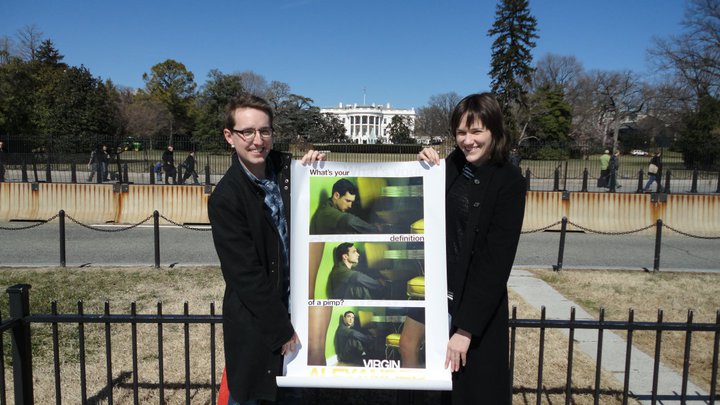
A little more than a year after filming began, I finally got to see Virgin Alexander in Albany on Wednesday. My scene lasted probably less than 10 seconds, but I’m sure I’ll win the best supporting actor award in the upcoming Oscars :p.

I jest, but the movie is actually doing well. It won awards at the Black Hills Film Festival in South Dakota, the Las Vegas Film Fest, the DC Independent Film Festival and VisionFest in New York City.

Watch this video interviewing Charlotte Barrett and Sean Fallon, the directors, about bringing the movie back to upstate New York. While you are at it, also watch this video covering the screening in Albany.

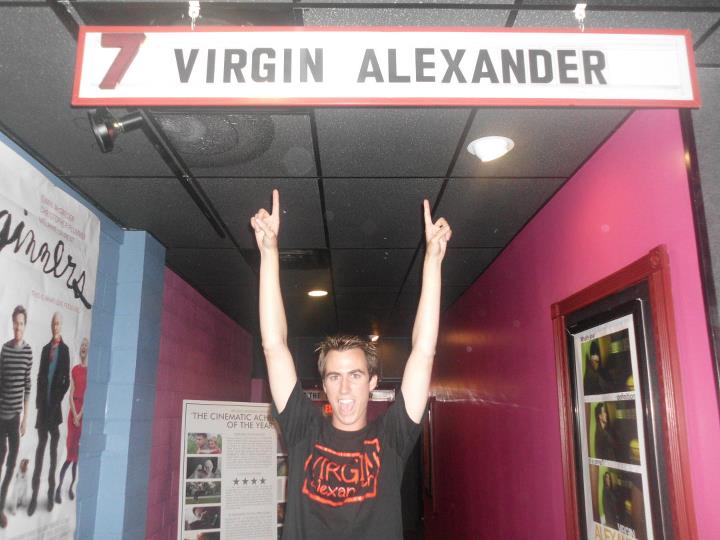
Following is a picture of me from the premiere, sporting a rare Virgin Alexander t-shirt!  I brought an entourage of 10 to cheer me on.

So, the moral of the story is that answering an ad on Craigslist for extras can get you a line and close-up in a movie, a free t-shirt, two IMDb credits, a kiss and memories that will last a lifetime.  :p

As anyone who took a production class learned, production is waiting.  That has not changed in this real world setting.

As an intern at Allied Pixel in Media, PA, I’ve done a lot of waiting.

On days I’m in the office, I come in, brew the morning coffee, and then wait for the rest of the staff to come in and check their e-mails.  Then I wait for some equipment to come in from a rental to check in, or an errand to come my way, or a piece of equipment to pick up from another production house in the Philadelphia area.  Some days, those tasks are almost non-existent, and I wait some more.

On these slow days, I’ll pursue their equipment manuals, or look at their B&H manual and try to decide what I want to buy, what I can afford, and what I really can afford.  Sometimes I grab some of their cameras and play around with it.  The cameras they have are incredibly nice, but even with expensive professional cameras, there is only so much time you can wrack focus between a chair and a water bottle before you’ve had enough.

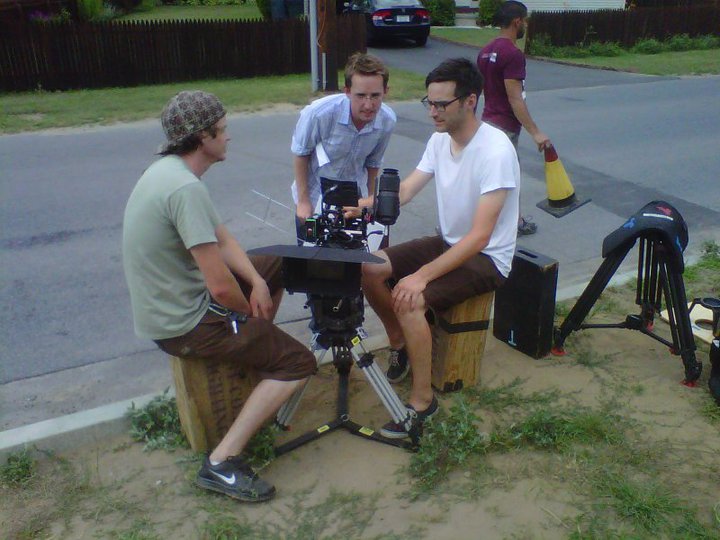
Shooting days are much more interesting to me, but sadly, the waiting doesn’t end.  I help set up shots and lights, but once the filming begins, I just kind of have to wait to help break the set down, although sometimes I get to be the slate boy.  Those are the exciting days.

The shot gets set up and refined, and then you wait for the talent.  The talent, usually someone important, gives you five minutes to do their portion, and leave.  Then you wait for the next person, until you quickly have to break everything down.  The moral of the story is that production is a start-stop business, especially in the corporate video settings I’ve been in.

To Sequence 64:

Enjoy it while you can.  Have fun.  These people will become your family for a year.  You’ll be pouring your sweat and blood into projects together, spending late nights in the editing suites or in the studio, and not sleeping together.

The most important piece of advice I can give to anyone is for whatever you want to do, keep doing it.  If you want to be a director, don’t stop directing, do as much of it as you can while you have the free equipment and the friends you can draft into being producers, editors, cast, etc.  If you want to write, keep writing.  Don’t wait for an assignment to come up in class before you write something.  If you want to be a producer, produce stuff.  Don’t wait for an assignment.  Yes, classes are important, but take advantage of the resources at your disposal.  You are paying a lot of money for the right to the Cage and the edit suites, use them!

If your sequence is anything like our sequence, you’ll have a broad range of people around you, with different goals and interests.  These are people you’ll want to keep in touch with long term, so don’t just shut yourself in your apartment to study, study with friends.  Develop working relationships with people you like.  Someday you may be in a job where your bosses are looking for someone, you can suggest someone who is not only talented and qualified, but who you’ll enjoy working with.

To make the most of TRF, just work on whatever sort of projects you’re passionate about, and make sure you cultivate relationships with your classmates.

Instant Nostalgia

Posted: 5th August 2011 by jmorgera26 in Random Reflections

The day of graduation, having skipped the ceremony, I drove down I-81 to I-476 to I-95 which allowed me to sleep in my own bed, to begin my internship two days after our Newhouse ceremony.  So, I get up at 6:30 AM, eat breakfast, pack lunch, and get on I-95, sit in traffic, and go onto I-476 which, after sitting in more traffic, takes me to Media, PA, where Allied Pixel is located.

I pull into the parking lot, with only one other car in the lot.  I had been told to be there at 8:30.  I check the front door of the building, which from the street looks like a house with a sign in front of it.  It’s locked.  I’m nervous.  I walk around to the side of the house, and check another door.  Not locked.

I enter a large greeting room, which I recognized from my interview in March.  I wander around, looking for someone.  No one on the first floor.  I try to remember the floor plan from when they showed me around at the interview, and decide to wander downstairs.  I walk down the stairs, with no lights on, to the basement where they have all there equipment, where all the lights are off, but one.

In the break room stands a pleasant old man preparing the morning coffee.  He introduces himself as Jim, and asks me if I have a driver’s license on me.  He then asks me to return a lens to Allentown.

So, as my first assignment post-Syracuse, after driving the previous day from Syracuse to be there, I drive roughly a quarter back to Syracuse to return this lens.  Life knows how to make you instantly nostalgic.