


Welcome to WordPress. This is your first post. Edit or delete it, then start blogging!
Summer Internship at Focus Features
Posted: 30th December 2011 by carminedufour02 in Random ReflectionsPer Schoony’s request, here are my posts about my internship at Focus Features.
July 11th 2011: What An Acquisitions Intern Does
As an acquisitions intern I get to screen DVDs and write coverage. During the Los Angeles Film Festival, I had the opportunity to go see both short films and feature lengths. Not the most talked about films; the smaller ones that no one’s ever even heard of. This gives interns the opportunity to find hidden gems. You get assigned films you wouldn’t necessarily go see otherwise and that helps broaden your perspective. The executives get invited to all sorts of screenings. Whenever they can’t attend, they ask the assistants or the interns if they want to go. I got to go to a private screening at ICM. The film turned out to be horrible, of course, but watching a horrible film until the end teaches you a lot! You have to stay critical and objective and really understand what doesn’t work. I’ve also learned that Focus Features, a company I personally idolized, is just like any other money-making business in Hollywood. They acquire films that they think fit into their brand. The only difference is their brand has a quality stamp. They still have to be profitable and keep up with their competitors. I’d like to say I’ve watched a good 70% of films produced or distributed by Focus, but one of the assistants made sure to set up a system where interns can borrow Focus films and watch them at home. This way we can make sure we are as familiar as can be with the brand. During our LA seminar in January, somebody told us to work for a company whom we respected creatively. I always thought that was smart, but it makes even more sense now. You have to live and breathe the brand, so might as well love it!
July 19th 2011: Best & Worst Part of My Internship
DATA-BASING. At first, when the intern that was training me showed me the database, I thought, ”Okay, not bad, I can handle this.” At the end of the day, it was more like ”Shoot me now. There’s no way I’m doing this 3 times a week.” And now Filemaker Pro and myself have become sort of good friends. Not best friends, because it still does annoying things like close on me before I have time to save the long and complicated Russian actors’ names I just typed into the cast section, but I’m starting to better understand its existence. You know how everyone told us to read the trades and keep up with what is going on? Well, my job is forcing me to do that! I spend at least half of my day reading the trades and then logging in a bunch of info. Every time I don’t know someone’s name, I quickly search for them on IMDB and so soon I’ll know absolutely everyone worth knowing in Hollywood! I think that’s pretty brilliant. It also helps me with my job search because I also constantly know what is in development and in pre-production.
The other best part of my internship are the assistants. They are filled with knowledge about the industry in general and about the company in particular. They also know what it feels like to be an intern. They become your closest allies on the job and can help you make sure you don’t put your foot in your mouth. All of this makes it easier to understand how so many people managed to patiently work their way up while offering up free labor! It’s all about the give and take!

Me and the 3rd floor gang: a mix of assistants and interns
August 2nd 2011: It’s Festival Season!
I love film festivals. I like how we spend weeks prepping for it and how it all boils down to a dozen days at most. I love the idea of discovering a real gem of a film and being able to buy it and distribute it for the whole world to see. As a producer’s assistant in Montreal (before the master’s program), I had to prep for all the big festivals like Cannes and Toronto. The producer I was working for was selling films or trying to get funding for his slate of projects in development, so I was really on the other side of the deal, but it’s really cool to see how things are not so different here in Hollywood. We’re simply operating on a larger scale here. This mainly means prepping for more festivals with more executives attending. They still need a booklet made for them with all their appointments and a detailed list of all the films that are being screened at the festival. They still shop around for the best hotel, price and location wise, they just have bigger budgets! Acquisitions executives attend festivals and watch as many projects as possible. If anything interests them, they will talk things over with Business Affairs executive who are also attending. The Business Affairs executives are often more of the decision makers because they work out all the deals. They can assess what is a good investment for the company. In the end, of course, the decisions have to be passed through to the CEO and president of the company. Films are acquired for many different reasons, and great films won’t get picked up some times, but that’s just how the business goes. Festivals are exciting because deals are being made, usually under tight deadlines, in these glamorous and dramatic settings. I love knowing that I’m a part of that somehow. It only makes me more excited for the day when I will be able to attend a festival in order to promote one of my films. It helps keep the dream alive.

August 10th 2011: It’s A Wrap…
This is my last entry. As I am writing this, I am realizing that my days at Focus are coming to an end. The summer is almost over. During my internship, I rolled calls, burned DVDs, logged trade articles in the database, updated submission lists and wrote coverage. I basically served as a second assistant in the acquisitions department. None of this was completely new to me because of my previous work experience, but it was necessary for me to perform all of these tasks in an LA office. An internship is a learning ground which means you get more time to settle in. Not everything hangs in the balance. Once you’re hired, things are slightly different. I now know that the most important thing I will take away from this internship is LA experience. It will prove to be invaluable I am sure. I’ve started applying for jobs and basically any experience you have outside of LA doesn’t count. You could mess up an interview simply because you don’t know the lingo. If you don’t know what rolling calls means, you can’t tell them you know how to do it! Having this internship on my resume makes the whole difference. As an international student, I know that it might be impossible for me to stay in LA (or America for that matter!) beyond August 2012, but I know that no matter what, this year in LA will be a great step forward in my career. Any experience in LA is worth millions outside of LA. Guess that makes us all millionaires.

My badge & the Beginners script
How to be the best PA that ever existed in all of the land.
Posted: 14th December 2011 by Adrienne in Random ReflectionsSo maybe I went a little over the top with the title of this post, and I don’t exactly have so much experience that I know exactly what it takes to be the best PA ever down to a T, but, I think I have worked enough to give some overall decent advice on being a kick ass PA. I really haven’t ever messed up on any of my jobs (knock on wood) , so you could say my advice is credible. So in no particular order, here are some tips on being a PA.
For starters, as you meet people on set and are introduced to people, actually try to remember their names. There were a few jobs I did where I just didn’t register the persons name as I shook hands with them and then I had to make an effort to listen for when people addressed someone by name so I could learn their name that way. You can always apologize and ask for someones name again, but you’re way better off if you just learn their names in the beginning. Knowing names is important if you have to call someone on walkie, or if you are asked to bring something to someone it is good to know who they are, things like that.
Learn the lingo. Being on set can feel like you’re in another country where you don’t speak the language, kind of. The world of production has its own little language: sticks, stingers, C-47’s, high hat, half apple, greeking, cookie, juicer, day player, hot points, the list goes on and on. There are still plenty of terms that I don’t even know myself, but that’s what google is for, right? Variety has what it calls the slanguage dictionary and mostly covers industry terms. As for set lingo, FilmLand is one of the better ones I have come across. Also, I don’t know what is available for the droid, but the iphone has all sorts of useful production related apps. One of them is the film production terms app. So take some time to educate yourself on production language, and take note of new terms as you hear them around set.
When you are just starting out, it is likely that you will work for only a day or a few days for any given job. But as you should know, any single day of work can lead to more work in the future, so with that in mind, you should go into every job like it is an audition. You are trying out for a position on a crew and since you may only have one day with these people, you have to show that you are the best guy or girl for the part. You have to put on your best performance and impress everyone with your talents. I was talking to one of the production managers on the show I am working on now and when I said a first day of work is like an audition not only did he agree with me, but he said every day of work is like an audition. This takes me to my next point.
Never get too comfortable if you get on a long term gig, just because you were initially hired to work the whole season of a show doesn’t mean they have to keep you there if 4 episodes into the show you start to slack off. PA’s are too easy to come by in this town and whether you aren’t working hard enough, or someone just straight up doesn’t like you, you will be let go. So just because you got the part because you impressed everyone when they called you in for extra help during set up and ended up hiring you for the whole gig, doesn’t mean your job is secure. Don’t slack off, and work just as hard as you did on the first day, everyday.
There are a few places you should avoid lurking in or around or spending unnecessary amounts of time in. The main two are the production office (PO) and video village. On my current job our PO is just a shitty small mobile mini packed with 3 tables, some shelves, a mini fridge, and a lot of random junk. It gets crowded pretty fast and it doesn’t always make the production coordinators and managers too happy if you linger around the PO when you have nothing to do. So you should really avoid the PO for two reasons, first because it is generally not a place where PA’s are allowed to hang out and relax, and second because if you are sitting around the PO doing nothing, the PM’s and PC’s will clearly see you sitting around and doing nothing. The second main place to avoid is video village. Video village is the cluster fuck of monitors where a few selective people sit comfortably in directors chairs and monitor the shots. Crew members welcome at video village include the director, the director of photography, producers, and script supervisors. Crew members typically unwelcome at video village: PA’s, PA’s, PA’s, crafty workers, PA’s,oh and PA’s. As tempting as it is to hang around video village and watch the playback of the most recent take of that really cool scene about something really cool, unless you are brining the director his coffee you have no reason to be there.
Going off of what I just said, you can get fired for being unlikable, now this is something that is a little less out of your control. You can’t necessarily change who you are and not every person you work with is going to like you, but just do your best to not get on anyones nerves. This also doesn’t mean that you should close yourself off and not be yourself in fear that your witty outgoing personality may get you fired. People like working with a fun crew, so don’t be the Debbie downer. I am currently working a night shift and spend any time off set, in an office with just my production manager. Spending long nights together would be rather unbearable if we were both boring people. Easier said than done, but try not to tick people off, but don’t be lame at the same time.
Don’t wait until you are asked to do something that obviously needed to be done. If a trash can is full, take the trash out. If something is messy, clean it up. If something is broken and you are capable of fixing it, fix it. It is really quite simple and again more common sense, if someone is constantly pointing out tasks that you could have easily noticed yourself then you are not taking enough initiative on set to do the mindless PA duties that are expected of you.
It happens to the best of us, but try your hardest not to mess up a lunch order. For all the lunch orders in your future you are bound to mess up one. If you are taking individual orders try to get people to be as specific as possible so that when you are ordering their burger you don’t have to decided for them if they want cheese on it or not. What kind of toppings do they want on their sandwich? What type of bread? Do they want their dressing on the side? If you happen to not get a dressing choice for someone ask for a few different kinds on the side. If you order from a place that has multiple locations make sure you go to the one that you called, websites don’t always have the correct address so confirm what the address is when you order. When you place an order, have the person read back to you everything you ordered to make sure they got everything, then when you go to pick up your order go through everything and make sure it is all there before you leave. If you are ordering a catered style lunch, be sure to get serving utensils if the restaurant normally supplies them. Also in general be sure to get any plates, bowls, utensils, etc that are necessary for the meal if the restaurant normally supplies them as well, sometimes crafty will have everything you need to serve lunch, but it is better to be on the safe side. Also, when picking up lunch, try not to be late bringing it back to set. The crew has to eat after working for 6 hours, so if lunch is at 12:30 you better damn well have lunch ready at 12:30 or the crew can call a meal penalty and this will piss the higher ups off.
Runs, you are likely to be sent on a lot of runs. Whether it be picking up stuff for crafty, a coffee run, getting ice, picking up a permit, if it is needed on set you are most likely to be the one who will have to go and get it. Doing runs isn’t me time, don’t take the scenic route, and don’t slowly wander through Target or the grocery store in an attempt to gain some sanity during this time away from a hectic set. It’s simple, get your shit and get out. Don’t be that PA who is sent around the corner to buy a few bags of ice and you come back 45 minutes later on a run that should have taken you a maximum of 15 minutes. Don’t be stubborn and try to find something yourself, sometimes the quickest way to get what you need is to ask where it is. Shy about asking where something is, well get over it. One thing I have noticed though is that all the Targets in LA seem to seriously lack a helpful number of staff, and when all I want to do is find someone to ask where clothespins are there is not a single useless Target employee in sight, nor are they in the next aisle, or anywhere convenient. So if you are in Target, it might be quicker to just find what it is you need yourself than to try to locate someone to ask where that item may be. If the store you are at doesn’t happen to have what you need find another one that does, but call whoever sent you on the run and let them know so they aren’t wondering what the hell is taking you so long. It is also a good idea to check with them about going to another store. Don’t come back from a run empty handed, you were sent to go get something because it was needed, not just to waste gas and get you off set, so you better find a way to get what you were asked to get. Although if no store seems to have what you need, call someone and let them know and they will probably just tell you to come back. Sometimes whoever sends you on a run will print you out directions, but it is also very helpful if you have a smart phone with a GPS on it or just have a regular GPS.
When you are sent to go out on runs you will be given petty cash (PC). Sometimes when you are given PC whoever gave it to you will write down how much you were given and then you sign or initial by the amount. This is so that when you return from your run, if the change you have doesn’t match your receipts then you are responsible for making up the difference. Sometimes it won’t be written down how much you were given, so make a note of it yourself and remember how much you were given. DONT LOSE ANY RECEIPTS, always ask for one if you aren’t initially given one, even if it has to be reprinted, eventually it will just become a habit and you won’t have to think about asking. If you are getting gas the initial receipt won’t always say how much was paid per gallon. Sometimes you may have to go inside and ask for a reprint of the receipt that has the price per gallon on it, annoying but necessary.
More on runs, you may be asked to drive your own car (this is why a lot of job postings for PAs require you have a reliable car), or you may be given a production vehicle to drive. This may just be a minivan, or it might be a cargo van, 15 passenger van or a cube truck. This is pretty obvious, but be careful when driving production vehicles. I know a PA who ripped the whole back off of a mini cooper as he was maneuvering a cube truck out of the production parking lot, and I know another PA who simply just cracked the mirror on a 15 passenger van when she hit a AAA truck that was double parked. Both these PAs still have their jobs. Regardless, just try not to crash production vehicles because you never know how forgiving your boss may be. Drive safe and drive smart. Now, if you are not given a production vehicle to drive and you are asked to take your own car, you will most likely be paid for your mileage. So keep track of where you have gone and how many miles each trip took. You don’t have to be exact on your miles, typically they don’t look too closely at them, but for your benefit don’t put down less miles than you actually went; I always round up, even if I am rounding up from .3. If you don’t do a good job of keeping track of your miles, you are only hurting yourself, they could care less if you forgot to write down that 25 mile trip to Home Depot. Lastly, don’t go home with keys to a production vehicle. Even if no one will need the cargo van until the next day, you will still need to bring them back. It happens, I’ve seen it happen, but try to avoid it, mainly to save yourself from having to go back to work to bring the keys back.
Ask questions, but try to avoid asking questions. This one is kind of tricky. You are always encouraged to ask questions when you don’t know how to do something, don’t know where something is, etc. Obviously if you really have no clue how to do something, or someone asks you to go get something from somewhere and you don’t know what or where it is, you should ask. Asking someone to take the time to explain something to you in the end will probably waste less time than you trying to figure it out yourself, possibly messing something up, and then needing an additional person to correct what you messed up. Then again, if you really could figure it out yourself, take an extra second to do that. On my current job I have asked my boss a question, and from time to time the response I get is “you’re smart, figure it out yourself.” Just use your best judgement, don’t be afraid to ask questions because in the end everyone would prefer you ask then do it wrong. In general everyone on set is busy doing something, so if you can figure it out yourself, go ahead and figure it out. But really, just to finish up this topic, people do prefer if you ask, they understand you’re not going to know everything, you’re just a PA, don’t be afraid to ask stupid questions because messing something up because you didn’t ask how to do it could cost you your job.
It doesn’t hurt to be in shape, even if you are just moderately to the slightest bit fit. If you are working as a set PA there is a good chance you will spend most of your 12 hour shift standing. Some of this standing is likely to be spent running (and no, not the running as in you are going on a coffee run but literally running), or moving around very quickly. While you are doing this exhausting constant standing and moving around very quickly thing, you will also likely be doing some heavy lifting. This doesn’t mean you have to go to the gym and bulk up so you can carry 3 cases of water at a time instead of 2, but if you are in general good health this will make your job easier and far less exhausting, it is as simple as that. On the subject of lifting, you know the saying “lift with your legs, not with your back.” Take care of your body, back injuries are a common problem in production work so take caution when you are doing all the running and lifting. Also, try to stay healthy, calling in sick doesn’t really exist in production unless you like, wake up for work and can’t move or breath or see or smell or whatever. On a long term gig you will spend a lot of time around a lot of people exposing yourself to germs, you will work long hours and sleep little, have weird eating habits, probably eat a lot of crap supplied by crafty and likely live an unhealthy lifestyle brought on by production work. So, try to sleep, wash your hands often, use hand sanitizer, take your vitamins, and stock up on emergen-C. You might be able to find emergen-C at crafty, so take advantage of that. Do what you can to stay healthy so you aren’t in a position where you have to call in sick.
Avoid the PA huddle. Often times there won’t be much to do around set especially if shooting is in progress ,then they just want everyone to stand still and be quite and not do any noisy work. During these moments of nothingness PAs tend to stand around in a little huddle and quietly chat. Then when someone important notices a group of PAs standing around doing nothing, this obviously does not look good, even if there is absolutely nothing that you could possibly be doing. So try to avoid standing around with all the PAs doing nothing. So what do you do instead? Invent a job for yourself, or at least hover around the crafty table and rearrange the bags of corn nuts, for some reason there are always corn nuts at crafty. Can’t think of something to make yourself look busy? Try hiding. I haven’t had to do much hiding on my current job, because I am the only PA on the night shift, so there is no PA huddle to avoid. But my good friend who works the day shift has a few hiding places that she goes to when nothing is going on and she doesn’t want to be seen doing nothing. These hiding places may be dependent on how well you get along with other crew members. She spends a lot of time hiding out in the audio booth because she has befriend our audio guys. Other times she just walks to the dumpster, not the most pleasant escape from set, but its better than being caught standing around with other PAs looking useless. You don’t want to put the idea in peoples heads that they could manage with less PAs than they currently have. As a show progresses the higher ups begin to see where they can cut crew, it happens on every show. As things get going and everyone gets into a rhythm they will begin to trim the fat. Usually this starts with PA’s, so work hard and look as busy as possible all the time so that when these cuts are made, you hopefully aren’t let go.
Carry the right tools. There are a few things that are useful to always have on you, for one because they are commonly used around set, but also because you can impress people when someone quickly needs something and you are the one who has it. I suggest always having a permanent marker and a utility knife or a leatherman on you. Keep them in your pocket, strap em’ to your belt or hold them your little PA fanny pack pouch thing, just always have them accessible. A pair of gloves is also a useful thing to have. You can go ahead and be fancy and get a pair made specifically for production work from a company like setwear or a regular old pair of basic gloves will do the job. After your first few days you will figure out what you need to have on you. On my current job there is one PA who comes in wearing his little PA pouch and he happens to have every color of permanent marker that has ever been created. He typically works cleanup night where we clean up the set, and it is entirely unnecessary to have a sharpie rainbow at your side, if anything only a black sharpie is occasionally needed. Why he continues to bring his sharpie collection to every clean up night I do not know, but to each his own. My point, take a few days to figure out what will be handy to have on you, and then lighten your load by only carrying around what you need.
Know and use walkie etiquette. This takes all but 5 minutes to learn, and once you learn it and use it you will never forget it but production does have its own little walkie talkie language that you will need to know. Before I even get into walkie etiquette I will tell you this, DON”T LOSE YOUR WALKIE. Walkies are like $250-$300 and if you lose yours, there is a good chance you will have to pay for it yourself. Walkies have a little number on them and it is someones job, usually the key set PAs, to keep track of who has what walkie based on these numbers. But if you lose your walkie, it is your fault. So here is some walkie language for you: At the beginning of the day when you get your walkie you should do a walkie check, simply just say into your walkie “walkie check,” and if someone heard you they will respond by saying “good check.” When you need to contact someone over your walkie you say your name to whoever your callings name. So it would be something like “George to John.” Then John would say “Go for John,” then you would proceed to tell John whatever it is you need to tell him. The same goes for if someone calls for you, you say “go for” followed by your name. Some people say “go for me,” others say “go ahead” and some people just say “go.” When someone asks you to do something or just tells you something via walkie you should respond “copy that,” “copy,” or “copy you,” to let the person know you got what they said and you understand it. If you don’t understand what someone is saying asking them to “go again on that” or “repeat that” will do the trick.When someone calls for you and then they say “what’s your 20?” they are asking you where you are. If you call for someone or someone calls for you and you are not available you say “standby,” then when you are ready you say “go for (your name).” If someone asks you your 20 when your in the bathroom you can say “10-1” and that means you going number 1, and “10-2” means your going number 2. I just usually don’t respond until I am out of the bathroom. On a set each department has its own channel. Channel 1 is almost always production, then 2 is typically open, 3 is often camera, and the others vary. Usually every other channel is an open channel, this is so that if you need to tell someone something that is longer than like 2 sentences, you switch to an open channel so that you don’t clog a used channel with your extensive conversation and you save everyone from having to listen to the back and forth between you and someone else. You can also switch to an open channel to talk about something a little more private, but there is no guarantee that some curious people won’t switch along with you. So when you want someone to switch to an open channel so you can hold a little conversation with them, do the standard “George to John” then ask John to switch to 2 or whatever channel, they will say “switching” or “switching to 2” then you switch to 2 as well, confirm they are there when you get there, and then go ahead and chat it up. Then when you are done say “switching back to (whatever channel you are normally on). Anther common walkie term is “flying in.” If someone asks you to bring something to them you say something like “flying it in” or if someone asks you to come see them you say “flying in.” Those are the basics, avoid using your walkie to talk about unnecessary things it pisses people off and is generally not welcomed. If you are on a long term gig the crew will get comfortable and will start messing around saying useless things over the walkie, but just be cautious before you hold your walkie up to your phone and play some annoying song for all of channel 1. Knowing walkie etiquette will help you look like you know what you’re doing even if you really don’t. Another tip, don’t take off your headset or take out your ear piece, I’ve seen people get yelled at because they didn’t have their ear piece in when someone was trying to get a hold of them. Ok, I have more, be careful of keying, this means accidentally pressing your talk button when you don’t mean to, this can result in just a lot of annoying fuzzy scratchy noise going on for however long you are keying, or it can result in everyone on your channel hearing whatever it is you may be talking about. You will likely be given a head set or what we call a surveillance kit (surv). The head set is less common, and is just your typical headset with one external headphone and a mic, the surv is an earpiece with a small mic you clip onto the front of your shirt. Make sure your walkie is off when you plug in your headset/surv or it will make an unpleasant noise for everyone on your channel. People have their own preference for how they wire themselves up, it is most common to run your wires down the back of your shirt and plug them into your walkie which you keep on your belt or your pocket. Then if you have a surv the ear piece part clips to the back of your collar and then the rest loops over your ear, then you can run the mic over your shoulder and clip it to the front of your shirt, this helps keeps your wires out of your way. Knowing how to wire yourself up will also help you from looking like a noob. OK, that was way too much on walkies, that could have been its own blog post.
Walk fast and with purpose. This is not necessarily general PA knowledge, but something I made up while working on my most recent job. This is somewhat similar to the part about hiding, but is useful if you have nowhere to hide when you have nothing to do. The idea of walking fast and with purpose is useful in two ways. The first is that if you have nothing to do and you can’t find anything to invent for yourself to do, and you are kind of just aimlessly walking around, as long as you just walk quickly and somehow look like you are on your way to do something very important, or like you are in the middle of something important, you can actually appear to be doing something important. A brisk pace and a determined look on your face often does the trick. Its second use is to just avoid doing some stupid task that you really would rather not do. Now I am not saying you should be lazy and avoid all the shit jobs, but if you have cleaned out the cast bathroom 4 times and you really feel it is some other PAs turn to do it, then by all means, go ahead and try to avoid doing this. So how do you avoid being asked to do a task when you are doing nothing, you walk fast and with purpose. You hear 2 people talking about how the cast bathroom needs to be cleaned again, and you notice that Tina, who is busy doing nothing but chatting up the crafty lady is well, not busy, AND she has never cleaned the cast bathroom. To avoid being asked to clean the bathroom you need to vacate the crafty area, but you have to pass the 2 people that you overheard discussing the need for the bathroom to be cleaned. So what do you do? Quickly walk away, and as you pass these 2 people, put on your best “I have something really important to do” look. They may stop you anyways, or they may just ask Tina to do it.
It may seem like a lot, but the majority of it all is just common sense. PA work is not a learn from your mistakes kind of job, if you do make a mistake, learn from it, but it’s best you just don’t make a mistake. Well, I think that is all I have to say about being a good PA, check back, maybe I will add some stuff.
PA Experience Parts 5,6,7,8,9, 10 and 11.
Posted: 17th November 2011 by Adrienne in Random ReflectionsThe beginning of November marked the beginning of my 6th month out here in LA, and it feels like the past months have flown by but at the same time it feels like it has been forever since I packed up my car and made the trip out here. It’s hard to keep track of time and disorientation comes from multiple variables; for one the lack in any seasonal change, but also the long hours, strange scheduling and not always working Monday-Friday but working through weekends. Come to think of it, I can’t remember the last time I had a full weekend off, but you could consider that a good thing because it means I am working a lot. I am currently working on my first long term gig, so I am going to go ahead and summarize everything that has happened between PA Experience Part 5 and now. So here we go:
Part 5: I worked for 8 days for the taping of an episode of the show Curiosity on the Discovery Channel. I got this job through a friend, and I thought I would only work for the day when I was called in to do runs, but ended up working the whole shoot. I have never watched Curiosity, but I supposed each episode covers a different topic, past episodes have been on the discovery of Atlantis, how the Titanic really sunk, and what would happen if Aliens attacked. This particular episode focuses on “your body on drugs.” It airs Sunday Nov. 20th on Discovery so if you are interested you should tune in and watch. This job was crazy, as crazy as you can imagine a show with a cast of 4 drug addicts would be. I am not going to say much about what went down during these 8 days, you should really just watch the show, and it might clue you in to how we went about making the show, although any sketchiness in the making of this show won’t be revealed. Mostly I was off of set doing runs, and while on set I was doing some rather odd jobs. One job I did was heating up a metal box by placing it in boiling water and then further heating it up with a blow torch. This “hot box” was a prop for the “emergency situation” portion of the show. Another one of my jobs was to stand by the jib operator and warn him if he was going to be run over by one of the drug addicts during their driving test. Whatever I was told to do I did it, I also did things I wasn’t asked to do but did them because they needed to be done, and I busted my ass the whole time, but this shouldn’t be news to anyone. If you work hard most of the time it will pay off, it did this time around for me, but I will tell you about that later. So the lesson from this job: while it may be more interesting to watch whatever absurd thing is happening on set, you should probably be restocking the crafty table or getting a water for the director. Stay busy, work hard, and prove yourself to be an asset to the crew every day of the shoot.
Part 6: Crack Whore Galore and this next job both actually happened while I was doing the episode of Curiosity. I had committed to two days of work on other jobs that took place during the time of the drug show. I worked Friday and Saturday for drugs, Sunday for CWG, Monday-Wednesday for drugs, Thursday for this next job, and then Friday-Sunday for drugs again. I was lucky to get hired for the drug show even thought I had to miss 2 days. Thursday I worked for Ignition, again we were doing a shoot for MTV, this time it was a launch special for the new animated series Good Vibes. Anytime I work for Ignition we are just shooting interviews, and while this is generally boring I like working for Ignition because I work as a camera PA. Being a camera PA for these shoots doesn’t involve much, just driving the cargo van to the shooting location, helping set everything up, loading tapes and batteries, and then taking everything down. However involved or uninvolved I am though, while doing freelance work it is important to take something away from every job, even if it is something as simple as the proper way to set up a C-stand (there is more to it than I ever was shown in school, but that is why on-set experience is so important). During this shoot I was literally handing tapes right to post as they came out of the camera and they were capturing the footage as we were shooting the next interview. The assistant editor was having some issues capturing the footage (it was his first day). There was a formatting issue and the DP was trying to figure out what was wrong with the hopes that it wasn’t his fault. After the DP had been in the edit room for a while I decided to poke my head in and see what was going on. The AE was trying to capture footage into an already started project that didn’t match the format we were shooting in. Now I am no expert, but I told the AE that once you start a project in Avid your options to change the format are limited, but if he started a new one he could set it to the proper format, he didn’t want to do this. In the end we figured out that we weren’t doing anything wrong so we weren’t worried because it wasn’t our problem, and the AE ended up doing what I had suggested. This particular shoot was cool because we were shooting the interviews of a bunch of the people who do voices for characters on the show. Voices for the show are done by Adam Brody, Jake Busey, Debi Mazar and Alan Tudyk. One of my duties included telling people outside the interview room to be quiet, this is a common PA task, and never really a fun one, other than that there is not much to say about this shoot. During set up I tend to spend a lot of time running out to the cargo van for things the DP wants, annoying yes, but don’t ever act annoyed about doing any task you have been given. Eager and willing is always the way to be on set.
Part 7: The women I worked for at Ignition passed my name onto some friends of hers at a company called Boxx Communications. The week following the drug show I worked as a runner for them because they had some people out of the office and needed some extra help. I only did like 1 or 2 runs each day, and on one day I went in and 2 hours later they sent me home because FedEx never showed up. I was either dropping off equipment or returning equipment, one of my drop offs was to the set of Sons of Anarchy, but they were dark so nothing was happening on set. One night I worked as a PA/camera assistant for the red carpet premiere of What’s Your Number. I had never heard of this movie until I showed up for the job, but Anna Faris, Chris Evans, and Blythe Danner are in it, so it was cool seeing them. Besides some simple set up, my main job was to shove a big light in the faces of all these actors while they were being interviewed. Everything I did for Boxx was easy, and the advice I would give regarding this job is that if you are supposed to get paid for something, don’t be afraid to speak out and make sure you get paid. If there is paperwork and time cards to be filled out don’t be afraid to ask about it. My problem was that my last day of work for this job didn’t end at the office. I was out on a run and was told I could just go home when I called into the office asking what I needed to do next. I put if off longer than I should have, but finally called the guy who had initially hired me and asked if I was supposed to have gotten paid. It can be awkward to ask about getting paid, but, when you need the money, there is no reason to let any paycheck slide. So if you had been told that you would be paid, find an appropriate way and time to ask, it can be as simple as casually asking if you need to fill out a time card or do start paperwork. For some companies, even if you may never work for them ever again, you still have to do start paperwork to get paid.
Part 8: During the week I was working for Boxx I also worked another day for Ignition. It was a quick shoot, we were shooting a promo for MTV with the cast of the show Awkward, and then we had to do another Good Vibes interview that didn’t happen the first shoot. Nothing major, and I can’t recall any standout moment or major lesson that happened during this shoot. I guess I could say though, if you start working every once in a while with the same crew, DP, sound guy, whatever. Try to learn how they like things done, this not only makes them happy and makes their jobs easier, but it also can speed things up and make you a more efficient crew, something that everyone will benefit from.
Part 9: The weekend after the Boxx week I worked for The Voice again for a little over a week. This I think was by far the most boring job I have done so far. Although on the first day or work there was an Irish dance competition going on at the convention center of the hotel that we were at, and we poked our heads in from time to time. I was working with casting again during the call backs for the top 200. It was essentially a week of sitting around and making sure the contestants made it to all of their various appointments and then making sure the contestants were staying out of trouble when they didn’t have an appointment to be at. From this job I would say always be careful about how comfortable you get at a job. While it is good to be comfortable with your coworkers, be careful not to cross the line and act as if you have been working with these people for years. Comfort in the workplace can be touchy when working with friends, especially if they are working above you. It is not safe to assume that because so and so is in this position and they are your friend that you don’t have to worry about getting in trouble for doing wrong or inappropriate things. It is important to develop a friendly relationship with your superiors if it appropriate, but just because you’ve gotten friendly with someone in charge, doesn’t give you the privilege to do whatever you want. So just use your common sense and don’t push your boundaries.
Part 10: A day or so after I finished up with The Voice a classmate in NYC needed an LA PA and our friend that she initially asked passed the job on to me. It was a day of work in this unfortunate place 2 hours outside of LA for a show I will not mention because I am going to criticize it.This episode of the show was focusing on teen pregnancy and we were going to be spending the day following around a pregnant 19 year old. Call time was 6:30am so I was up pretty early to make it to this unfortunate place. I met the crew at their hotel and then we headed to the pregnant girls house. I was immediately sent to get a salty snack for the host of the show and while I was out I was also asked to pick up cigarettes, light bulbs, and socks. The problem was, this unfortunate place is not the most convenient place to be in when you are trying to complete your runs in a timely fashion. There wasn’t a grocery store near by; I was lucky enough to find a hardware store where I purchased the assortment of bulbs needed, and was even luckier when this small hardware store sold socks. I was gone for way longer than I would have wanted to be and by the time I got back they didn’t even need the lightbulbs anymore. After our pregnant girl was interviewed at her home we were to meet her at her doctors office for her last ultra sound before the baby was due, and then we were going to her church group with her that supports young mothers. My tasks for the rest of the day included helping with equipment, helping with lens, battery, and memory card swaps, and slating. With this shoot I witnessed how a lack of organization, preparation, and the lack of a sense of urgency can really mess things up. Things started out bad when the address the production manager or whoever was in charge had was wrong, so we were late to our first location. I don’t know what really went down at the girls house because I was on runs for most of the interview with her, but when I got back they were still interviewing her and then had to get some B-roll. After the interview we rushed to have lunch and were to then meet the girl at her doctors appointment. Well, the address to the doctors office was also wrong and a bit out of our way. To make matters worse all the traffic lights in the section of town were out and traffic was reasonably bad for a place this crap town. So this poor pregnant girl just waited for us to arrive at the actual doctors office so we can shoot her appointment. We finally get there and slowly prep for the shoot. By the time we finish at the doctors office we are now late for the girls church meeting. Luckily everyone at the church group is patient with us and we finally start shooting the church group. After the group we shoot some individual interviews, but the other girls at the meeting need to go home, and the custodian wants to lock up, yet we continue to move at a glacial pace. So from this experience I will say, if you are interested in production managing/coordinating, double check the addresses of your locations, and when you get behind schedule it is pretty standard that something, anything, is done to make up for lost time. Our lack of punctuality didn’t lose us any money like it would in most productions, but we did make a lot of people wait around for us. And OK, sure, productions get behind schedule, but if things are off schedule due to very preventable things, like location addresses, I would say that is pretty unforgivable.
Part 11: This was a cool day of work. It was for the same production company I work for now, and the same one that did the drug show, so that is how I essentially got this day of work when one of the production managers from the drug show contacted me. It was for the show Sport Science and for this segment they were covering archery and golf. Overall it was an interesting day; the archer was on the olympic team and we had him shoot an apple off a dummies head and shoot an arrow through the hole of a spinning CD. This show shoots a lot of stuff with a high speed camera so thats cool because they play back just about every take done on the high speed so if you poke around video village you can see some of the high speed stuff. The golfer could hit a gold ball through a piece of plywood so we shot him doing that, and he also hit one through a cantaloupe, that was mainly for show because the cantaloupe exploded everywhere. It was a pretty typical day of PA work, loading and unloading the cargo van, going on runs, picking up talent. The worst part of the day was that my shoes and socks got wet in the beginning of the day when we were on location for the archery shoot and then they were wet all day. Always dress appropriately, especially if shooting on location, and if you know there is a chance of an article of clothing getting wet, have an extra pair of whatever it may be.
So there you have it, a somewhat brief summary of the work I did from the beginning of September to the beginning of October. I tried to add what I learned or put in a little advice to go along with each job, but I am a little delirious at the moment and couldn’t exactly remember everything from every job. Also, if you have made it this far into the post, thank you, I hope I didn’t bore you too much.
-
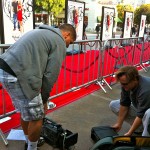
- red carpet premiere of What’s Your Number
-
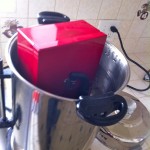
- “Hot Boxing” on the set of Curiosity
-

- On location for the drug addicts driving test.
-

- Irish dance competition during working for The Voice
PA Experience Part 4 – Crack Whore Galore
Posted: 24th September 2011 by Adrienne in Random ReflectionsI got this PA job in a kind of random way. I received a facebook post that included someones name, their email address and that they needed a PA. So I emailed this random person, said I was available, and I got the job. Oh yeah, but it was unpaid, but sometimes when you’re just starting out you have to work for free. It is a good way to meet people and gain experience. So I guess Crack Whore Galore was a successful play, and the writer/actors were now going to make a TV pilot for it. I don’t know what they are going to try to do with it, because I don’t even think its appropriate enough for HBO, but, who knows. So the idea behind Crack Whore Galore is Danny and Abby Galore are ex-crack whores who met in rehab (Dannys stint in rehab involved a cat) and now they are in America (they are from Britain?) and they want to become rock stars, and their band is called Crack Whore Galore. They get an appointment with some record company or talent scout or something, and instead of giving them a record deal he talks them into making a porno because they mention to him how much they like having sex. It is all very random, but actually amusing.
The thing about working a 13 hour day for free is that you still have to bust your ass because if you ever work for these people again you want them to pay you the next time, its not like, oh I’m working for free so I am going to half ass everything I do, your attitude should be that you want to make these people feel like they should be paying you. In the end it all kind of sucks because you get the shitty PA treatment and your taken advantage of and treated like an idiot, and you can’t say to yourself “well at least I’m getting paid.”
The whole day was pretty random, I showed up at 8am and spent about 10 minutes helping the producer set some stuff up. Then at around 8:30 she left to go get something to eat, and no one else was around yet, so I was just left alone for a good 45 minutes. Then she came back and the rest of the cast/crew started showing up. Although I wasn’t getting paid, overall it was a really good experience because I was essentially more of an AC than a PA based off of what I was doing. I was swapping batteries, and since they were shooting on the Canon 7D I was also in charge of media management. They left the task of taking full cards, backing them up on 2 hard drives, and then returning the backed up cards to the camera operators in the hands of the unpaid PA. So I was in charge of all the footage they shot, and if I accidentally handed back a card that wasn’t backed up I would have been killed. I haven’t heard from them since that day so I am assuming no footage was lost. Just to be safe I wish I had followed a better system than keeping backed up cards in my front pocket and unbacked up cards in my butt pocket. When I worked camera on the voice every time I pulled a card out of the camera they had me put a little strip of gaff tape along the edge of the card that connects to the camera or a card reader, then after the cards were backed up, the person backing up the cards moved the piece of gaff to the edge of the card so I knew I could take one of these cards and reformat it so it was empty and could be shot on again. So just a little tip, when you are managing footage shot to cards, try to come up with a system to avoid mixing up your backed up cards and your unbacked up cards, because if you lose 16GB of footage, there goes a lot of time and money, and you will probably never work with those people again. Along with this I was also doing all the slating. I was coincidentally lucky enough to have just read an article on slating and then had discussed it with two of my AC friends, so I was all set to slate and look like I knew what I was doing. On a more legitimate shoot there will be a script supervisor and you won’t have to ask the actors what scene is being done and then have them miss count so then you have to slate scene # 10.5 because they miss counted and left out a scene between what they thought were scenes 10 and 11. So I was keeping track of scene number, and then also keeping track of what take they were on. To keep track of take number, immediately after I did the slate I would run off camera and change the take number right away, doing it immediately keeps you from questioning yourself when its time to slate the next take whether or not you updated the slate and have the right take number written down. It is what the script supervisor or people in post or whatever (I am not entirely sure) wants that dictates what you say when you slate. it is common to just say “mark” and then close the clapper. When doing the slate you write down the scene number followed by a letter A-Z (excluding I, O, Y, and Z I guess they look too much like numbers). The letter indicates a change in angle, camera position, or lens. So A could be a close up, and B could be a wide 2 shot. Then you write down the take number. The thing about the letters though when you call out what is on the slate you don’t say the letter, you say a word that starts with that letter. So I would say something like “Scene 11 Apple, take 1.” So slating can be kind of fun, there are some commonly used words, but you can also make up your own, as long as you stay consistent. I’m no slate expert, but, this is what I know from my experience and from what I’ve read.
So my advice based off of what I learned from this experience is that your attitude towards working for free should be no different than if you are getting paid. Especially when doing freelance work where you may be only getting paid for a single day of work. You want to be re-hired when you are working for a paycheck, and you want to be re-hired and also get a paycheck the next time around when working for free. I will be honest, there were a few moments where I said to myself, “well I am not getting paid so I can’t stress too much about messing this up.” Like when they sent me to go get coffee for the coffee maker, and they said to just walk to one of the little shops around the corner, well, there weren’t really any little shops, I did eventually find one, it was small, they had 1 kind of coffee, and it was either decaf or expresso. I don’t drink coffee, I knew not to get the decaf, but I didn’t know how they would feel about the expresso, but then I said whatever, I’m not getting paid, its just coffee. So in a way not getting paid can take a little stress off because you can sort of justify your mess-ups, but in the end you should always work just as hard, and like any day of work, try to learn something. Slating was a really good learning experience, sometimes you have to do the slate again and before you read out the slate you usually say “second sticks,” the first time we had to re-slate I said “second mark,” and one of the camera operators corrected me, so I was learning, even though it was annoying how he corrected me (I also don’t think he had that much experience). Then I read in my book The Camera Assistants Manual that you can say second sticks or second mark. Anyways, back to giving advice, just work hard, there were points where I would run off, grab a fresh battery, quickly slate the scene, and then run off and back up a card. The director took notice to my hustle and willingness to do everything that needed to be done. So do what you can to help out, and do as much as possible, and you will likely get noticed for your efforts, even if you won’t be rewarded with pay in the end.
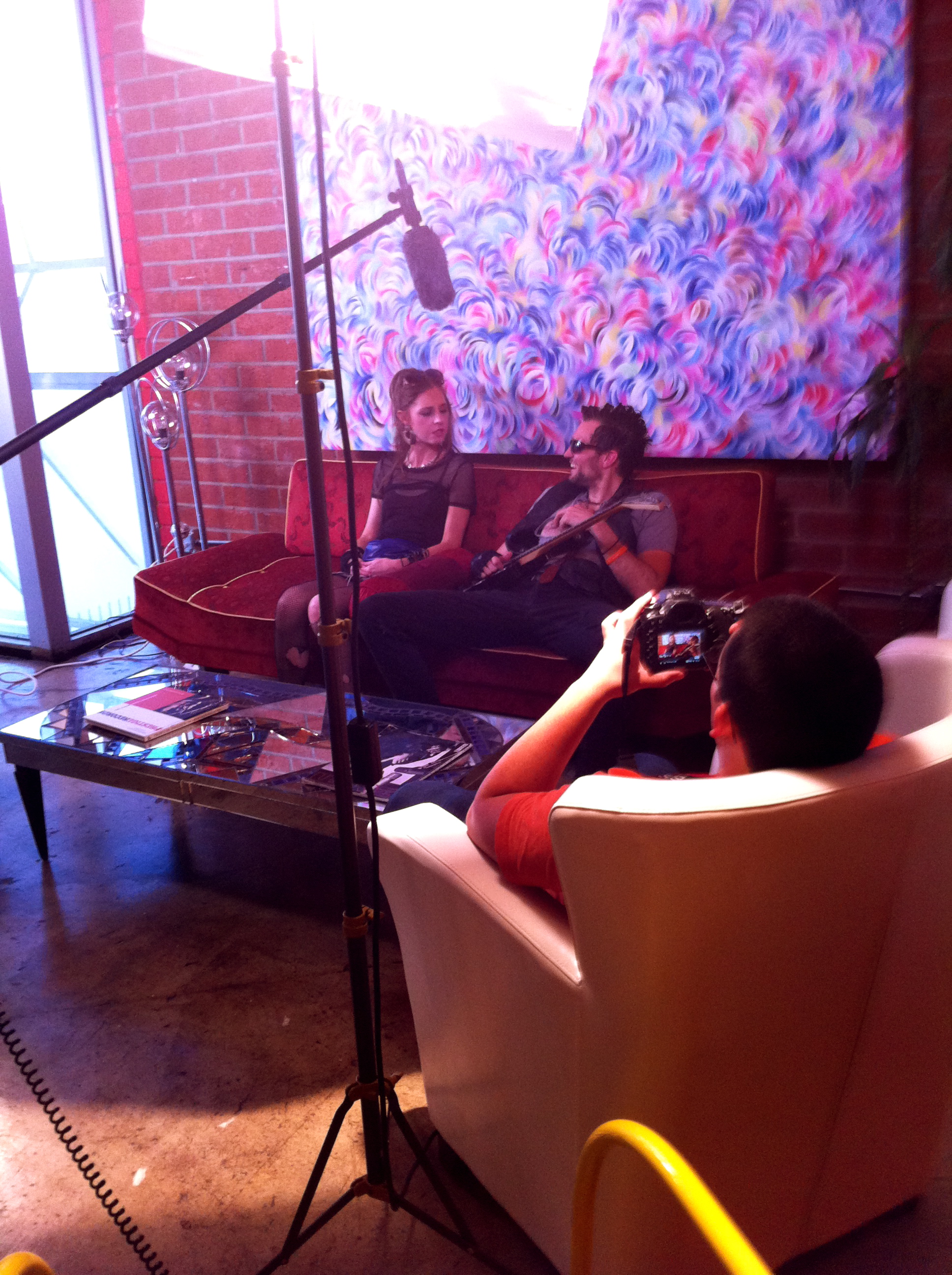
The Galores, waiting for their meeting to show off their new porno.
So I got some pretty good hands-on experience working on a blast for the network, which was pretty interesting.
A blast (I’m sure other networks call them something else, but whatever) in our case meant “a behind the scenes look at a film” where you take footage from the film and slice it together with soundbytes you take when you interview the movie stars at media day.
On paper it doesn’t sound hard.
As with all things post-related there were….complications.
I worked on two blasts while I was there- in one, the interviewer, while intelligent, “didn’t look pretty enough” for the producer, so we had to cut 100% of her lines from the bit. In the other, our replacement interviewer “sounded like a ditzy bimbo” according to the producer.
Here’s a thought- if you don’t want them to sound like a ditzy bimbo, hire an actual journalist and not an ex-playmate with no interview experience at all and maybe that problem handles itself.
But alas, you can’t have it both ways.
In the first blast, the rought cut I-(along with another intern who also worked on it) really made an attempt at creating an interesting narrative about what it was like to make that particular film. We took the most interesting soundbytes we could find, and cut them together with behind the scenes b-roll (since they gave us nothing else to use) to really try to create a story. I thought it looked great when we were done.
The company boss tore it to shreds. All he wanted was “some silly soundbyte, cut to the trailer, another stupid soundbyte, maybe something funny, cut to the trailer again, and you’re done.” No more, no less.
I was offended at first when my work was thrown in the garbage. But I googled a few more “behind the scenes” promos and that really is what they are- you just steal whole chunks of the trailer, throw in goofy soundbytes in between, and that’s it. So there’s another valuable post-production lesson right there: don’t overdo it trying to show off- just do what the producer wants.
The second blast I worked on went much faster- mostly because I put WAY less effort into it, and ironically, it went over a lot better. Though my supervisor fixed over the rough edges most of what I worked on made the final cut this time, and I’m pretty proud that the majority of my work made it on air.
[youtube=http://www.youtube.com/watch?v=kMxUPHyZUac]
Last week the order came down that we needed to start work on “The Database.” This meant that the lowest level employee (basically a paid intern) got to bust my behind for a week straight while I scoured the servers looking for every single piece of media that had ever been worked on- including a bunch of outdated graphics that would never be used again, and a bunch of incomplete stuff the previous editor took with him when he left the company.
Needless to say, I wasn’t pleased.
Apparently the owner of the company put a rush on this, and everyone got super-freaked out because word had it that if we didn’t get this thing done quick, jobs were being lost.
I’m surprised that people freaked out about that when they really needed to realize the actual issue:
People were about to get fired one way or another.
Consider this: the database, essentially, is a giant folder with every single thing- every promo, episode, interstital that we’ve ever worked on, rolled into one place, where it could be accessed quickly, and easily by someone who hasn’t worked on these things and wouldn’t just know where they were off hand. Maybe someone like…..a replacement editor? Or maybe a new producer? Hmm…..
Also consider the timing: A week ago,we were scrambling to put together a presentation for Dish network. A good showing here, and all of a sudden, our modest little outfit now has a LOT more viewers, commercial advertising, more revenue: we pull this off, and it could be HUGE. Then we’re pulled off it to work on…..a database? We delayed going after revenue to work on…getting organized?
Granted, we really DID need to get organized, true. But there’s no way the owner of the company would’ve forced us to switch gears so rapidly unless it was super important. And the only thing I can think of is that somebody screwed up bad, or things just aren’t working out and the Owner’s getting ready to chop everybody and start over.
…That’s going to be messy I think.
If it was me I’d make sure that the database took a long time to get done. As in, a REALLY long time.
Got an email a few days after I finished working at my internship from the head editor of the company.
Turns out he quit less than a week after I left. Can’t say I’m surprised.
The workplace culture of fear there was just backwards and irrational- he was overworked, largely ignored, and constantly treated like shit by the owner of the company.
While I was there he mentioned quitting once or twice- he daydreamed about telling the boss to shove it and just walking out the door, and watching everybody panic when nobody knew how to pick up the pieces and the network collapsed. Then they’d be sorry.
But the reality of the situation was, the head editor’s job was a stable staff position a rarity in the world of post-production. Most post jobs end as soon as the show’s season is over, or the show is cancelled. Some shows barely make it through a few episodes. Most shows don’t last a season. So every few months, the majority of editors go back to being unemployed, waiting for the next gig.
That’s the reality of the profession- work yourself to exhaustion for a few months at a time, then be unemployed. Rinse and repeat.
The staff position on the other hand, was a stable 10-6 gig where the head editor was salaried, (almost) never worked weekends, and pretty much ironclad job security. So while the job had its downsides, the stability of a steady paycheck usually outweighed the negatives. At least that’s what he told me.
For things to have gotten so bad he quit….I don’t know WHAT happened. I’ll check in with him later and update the post after I have a solid answer.
So working at my internship, there were certainly all kinds of little things to complain about. Keeping all of the footage on-network was not a good idea. We were hilariously understaffed. We could have used faster computers but again, these are all little issues, that you can deal with, and we dealt with those.
But there’s one thing that was absolutely crippling to the company: bitter office politics created mostly by middle-management.
I’ll break it down as best I can.
We have a mega-boss: He’s the head-producer/owner. He gives out assignments tells everyone else what to go do, then they go do it. Keep in mind however, he has final approval over everything- if he doesn’t like it, you have to redo it until he does. Simple enough.
Then there’s 3 bosses under him: 2 other producers, and a producer/marketing head who lives out-of-town and is impossible to communicate with. The marketing/producer moved away a long time ago, but is the head producer’s favorite and basically works from home (when she’s reachable).
Then underneath THOSE three bosses is the producer’s assistant, who exists as a barrier to the producer. You’re not allowed to actually speak to the producers- you give your questions to the assistant, who emails the producer, gets a response, and relays said response to you, so the producer never sees or deals with you.
This is a company with like, TEN PEOPLE, by the way. How things are this convoluted, I have no idea. But anyway, I’ll give you an example of a typical day:
1.) The head owner gives a general assignment to the producers.
2.) The producers then basically decides exactly how they want it to look, then you go edit together the promo-or interstitial or whatever. If you go off script at all for any reason, be prepared to get yelled at.
3.) Then you go make it, and it has to pass the peer review of three separate producers who don’t even talk to EACH OTHER at all, so be prepared for wildly different responses. One of said producers works from home, so if they can’t be reached, work is put on hold for at least a day. If one of them doesn’t like it, start over. If you have a question for the producer, that gets relayed through the assistant, so that takes hours to get answered.
4.) So then, after hours of re-editing this one assignment over and over, the owner comes in. 90% of the time he’s ticked off because the assignment is all wrong- it wasn’t done the way HE wanted. So he says it’s garbage, start over. And then it’s back to step one!
Do you see the issue here? The producers don’t ever actually ask the owner/head director what he wants, even though he has final approval over everything. So they’ll bicker among themselves trying to get things exactly the way THEY want it, when their opinion doesn’t matter at all, and is just overridden by the owner every single time.
The result is about 8 redo’s of every single assignment, which slows the workflow down to a snail’s pace. Then nothing gets done, and everyone gets chewed out, jobs are on the line and nobody’s happy.
The obvious solution would be for the owner to just flat out bypass the producers and tell editorial exactly what he wants- skipping at least , 5 of our typical 8 re-edits right off the bat. Barring that, the producers need to simply ask the owner, in detail EXACTLY what he wants. And if he wants something crazy, we need to tell him right off the bat so we don’t waste time on it.
But lo and behold, no one communicates with anyone- it’s just a workplace culture of fear. No one wants to bring up issues with the owner, because they’re afraid he’ll snap and fire them on the spot. So when the producers don’t know what to do, they’re too terrified to ask for direction. So in typical, responsible adult fashion, they just make shit up. Which never ever goes well.
If the company could just get to a place where everyone could speak their mind and work together like not-crazy people, I really do think everything would be fine. With things the way they are now….I don’t know how this place will stay in business.
If you want to work in post, you’re going to need thick-skin-it’s just a fact of life. You should know right now that Hollywood producers have a lot of talents, but ‘respectful criticism’ is not one.
Watching my boss deal with his producer. The guy took a lot of crap. Sometimes the producer would come by to watch what he had, and they would have notes for changes to make. No big deal. Then the producer would come back, after my boss made the requested changes and would just tear into the editor.
“This is totally unairable! This is totally unprofessional! Why would you edit this way?”
Because you gave me notes and told me to change it to look like this, sir?
“Why does the music fade here, what’s wrong with you?”
The production company gave it to us that way, sir.
“What did you do to screw up the sound so bad here?”
The cameraman forgot to turn his mic on, sir.
Well then FIX IT!!
Fix it, sir? I can’t….I can’t go back in time and turn on the-
And what’s wrong with the colors here? What happened?
I think the cameraman forgot to white balance here, sir.
You’re supposed to do that in POST! Don’t you know what white balancing is?
Sir, there’s a button on the camera explictly for that -I can show it to you- I’m not sure you understand how-
FIX IT!
I wish I could say I was making most of these up to be funny but….pretty much all real conversations here. We also had the producer google a music video to show what “cutting to the beat” looked like, and another incident where the producer brought in a color wheel because he legitimately thought the head editor was color-blind.
Perhaps, this is just my experience, but you should be aware of and prepare for the fact that some bosses will be insulting or condescending. You’ve gotta grit your teeth, and role with it as best you can- it’s just part of the job. Find your happy place!
The head editor’s secret? Anytime the producer is talking, he zones out and thinks about Loony Tunes reruns in his head. Works like a charm!